
If you grew up in highly stressful environment, then you may tend to get stuck in one mode of relating. That style may be very successful professionally, but personal relationships often become a replay of childhood family patterns. This article will help you improve your boundaries. (Scroll down to get to the quiz!)
Recognize Your Tendencies
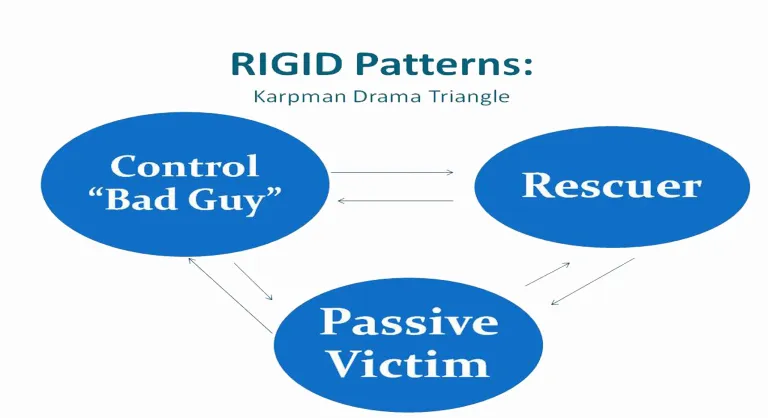
The work of Dr. Stephen Karpman (1968) is useful to recognize your pattern of relating. He points out that we move from one role to another in what is known as the “Karpman Drama Triangle.” (Don’t you love the name?) The diagram is adapted from his work.
Movies often illustrate how we can move from one role to another. Dramas such as Rain Man or Thelma and Louise are good examples of shifts in a style.
In Thelma and Louise, Thelma is stuck in a passive role and is victimized by her husband and other predatory men. After a crisis, she makes a radical flip into a Control mode that leads to tragedy. In Rain Man, Charlie Babbitt begins as an aggressive, controlling young man. His character shifts into a more balanced, nurturing style as he learns to care for (Rescue) his disabled older brother.
Ideally, we can shift roles as life demands and according to each situation. There are times to take control, to step in to rescue, or to merely follow another person’s lead. We need to know what makes sense in each situation.
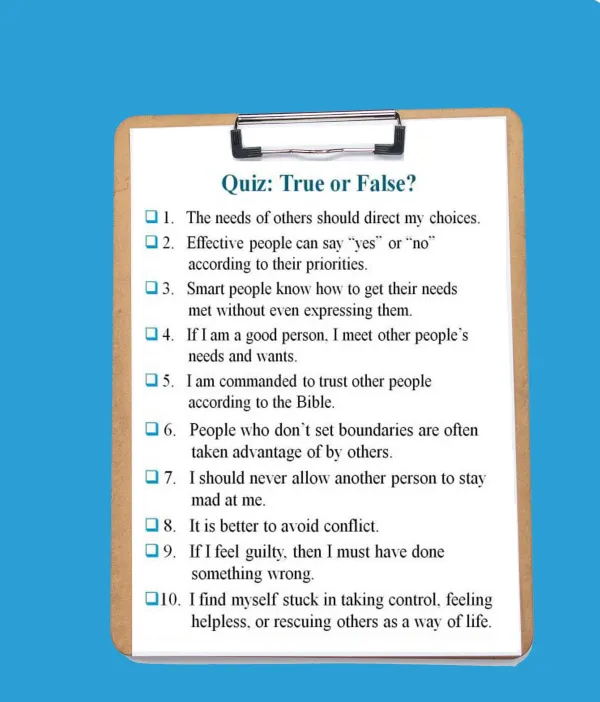
Take My Quiz on Healthy Boundaries
Be as honest as you can as you take this quiz. The BEST answers for the questions are posted at the end of this blog post. This quiz appears in my book, “Anxiety, Depression & Helplessness: Keys to Break Free.”
Which Style Fits You the Most?
Rescue
If you are a person who wants to rescue then you are generally very compassionate and sensitive. You may see every need as your own personal responsibility. You may feel guilty telling others “no.” If you rescue as a lifestyle then you are probably not adequately caring for yourself. You may repeat this pattern even though you see that your efforts are not appreciated.
Rescuers are often taken advantage of and discarded when they are no longer needed. Books often refer to this style as “Codependent.”
Control
If you tend towards the “Control” mode then you are able to take charge and are probably a good leader. You feel more secure and less anxious in that style of relating to people. Leadership ability is a good quality. However, for some, the control is an unhealthy desire to change or protect others. If you went through trauma, control is often a way to feel safe. There may be a fear that if you don’t take charge, everything will fall apart or someone you love will be hurt.
The problem with living too much in a “Control” mode is that we teach others to be dependent, passive, and irresponsible. Healthy adults do not want to be controlled. We may accidentally set up resentments in others who see us as pushy and domineering. It is also exhausting to try to control too many things.
It is important to respect and consider the boundaries and preferences of other adults as we navigate life. Sometimes that means allowing other adults to make mistakes.
Passive
If you are more of the “Passive ” style, then you are probably very easy to get along with! But, you may have had too many experiences with toxic people who were abusive or controlling. You might fit the “Learned Helplessness” model of thinking. It is important to begin to take small steps to take MORE control of your life where it is safe.
Learning to Set Healthy Boundaries
When you start to take care of yourself and begin to set limits, you might begin to feel guilty or selfish. This guilt is irrational. Healthy guilt is the result of breaking the law or a moral code. Irrational guilt comes from breaking a personal rule or taboo that probably originated from your family experiences or a fear of harsh punishment (or rejection). Resist the lie that you are being selfish. Replace it with the truth that:
- I am just taking care of myself. This is necessary if I want to be healthy.
- People who love me do not expect me to be their slave.
- If I don’t say what I mean, and stick to it, no one will take me seriously.
- It’s okay if sometimes people adjust to what I need.
- I am teaching others to be selfish when I always adjust to them.
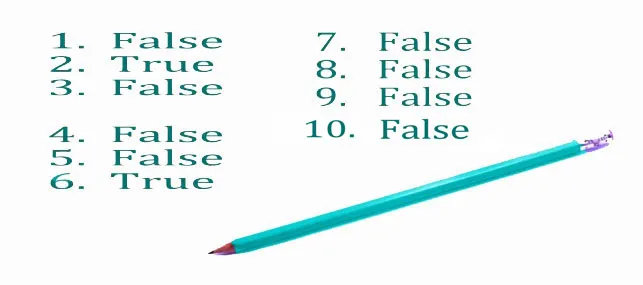
Answers to the Quiz
Here are the best answers to the quiz. The more of the questions that you missed, the more likely that your boundaries need attention! All of this information, along with more tips and strategies to build healthy boundaries, are in my book, “Anxiety, Depression & Helplessness: Keys to Break Free.” (This information is not a substitute for professional counseling, medical care, or medication.)
You can get a copy of the book on Amazon or Booksby.
References:
Karpman S. (1968). “Fairy tales and script drama analysis.” Transactional Analysis Bulletin, 26 (7): 39–43.