

There are imitations and counterfeits in our lives. If you pay for a designer purse or pair of sneakers, you don’t want a cheap knockoff. You don’t want counterfeit paper money when you go to the ATM. There is real and there is fake all around us.
Likewise, in spiritual matters, there is real and there is fake. There are false teachers, false philosophies, and even fake miracles. This blog is an overview of what the Bible teaches about spiritual deception.

Types of Deception
Deception can take many forms. Jesus cautions us that the road to destruction is wide but the way to God is narrow (Matthew 7:13-14)! Here are some explanations from the Bible about the many forms of spiritual deception in teachers, philosophies, and trends.
- Philosophies can be false (Colossians 2:8; 1 John 4:8).
- Religion can be false even if the name of Jesus is used to try to validate the teachings (Titus 1:10; Matthew 7:21-23; 2 Peter 2:3; Mark 7:7-13; 2 Timothy 3:5; Mark 12:24).
- Miracles can be performed by those who walk in darkness (Exodus 6:28—8:19; Matthew 7:21-23; Matthew 24:24; 2 Thessalonians 2:9-12).
- Teaching that makes us feel good without encouraging us to live according to God’s principles is counterfeit Christianity (Jeremiah 7:4; Lamentations 2:19; 2 Timothy 4:3-4 ).
Spiritual Discernment Is Not the Same as Intuition
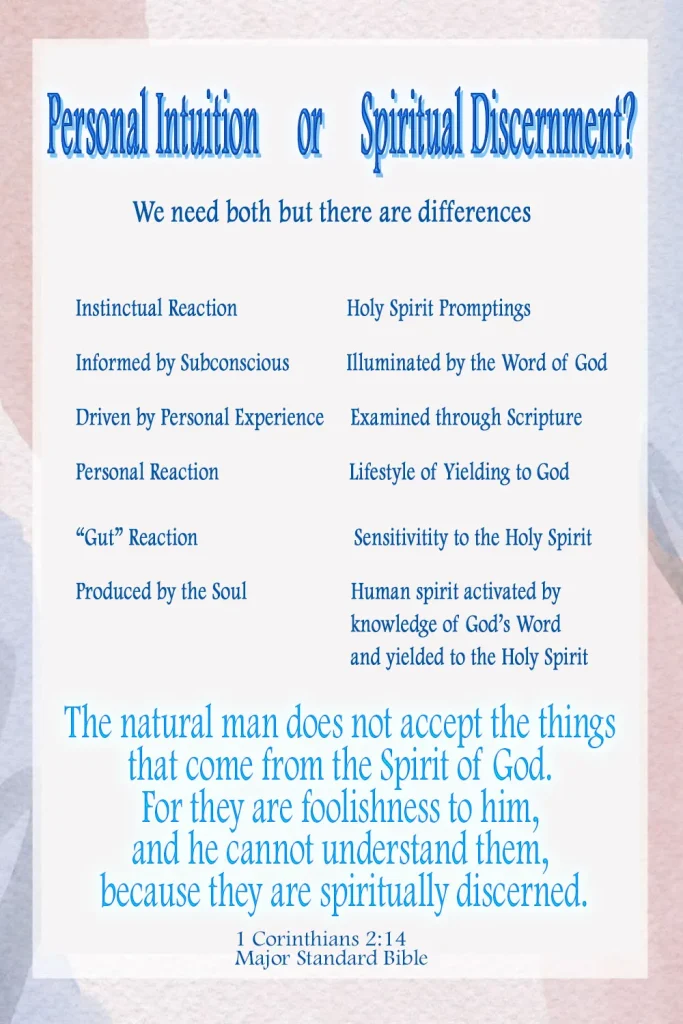
You can see from this chart that Biblical discernment is not the same as intuition. Intuition is our personal reaction to what we see and hear. It can be valuable and even necessary from a psychological standpoint. We sense warnings in our bodies or emotions when we are in a situation that is dangerous. It is important to value that information and trust it when we are looking at our personal interactions.
However, spiritual discernment is based on our willingness to lean into our faith, saturate our minds in the word of God, and learn to sense the promptings of the Holy Spirit (Colossians 3:15-16; Hebrews 5:14).
The Guiding Principle of Discernment
A different blog post goes into more detail of how you can build your ability to discern. But, let’s consider the most basic foundation of spiritual discernment.
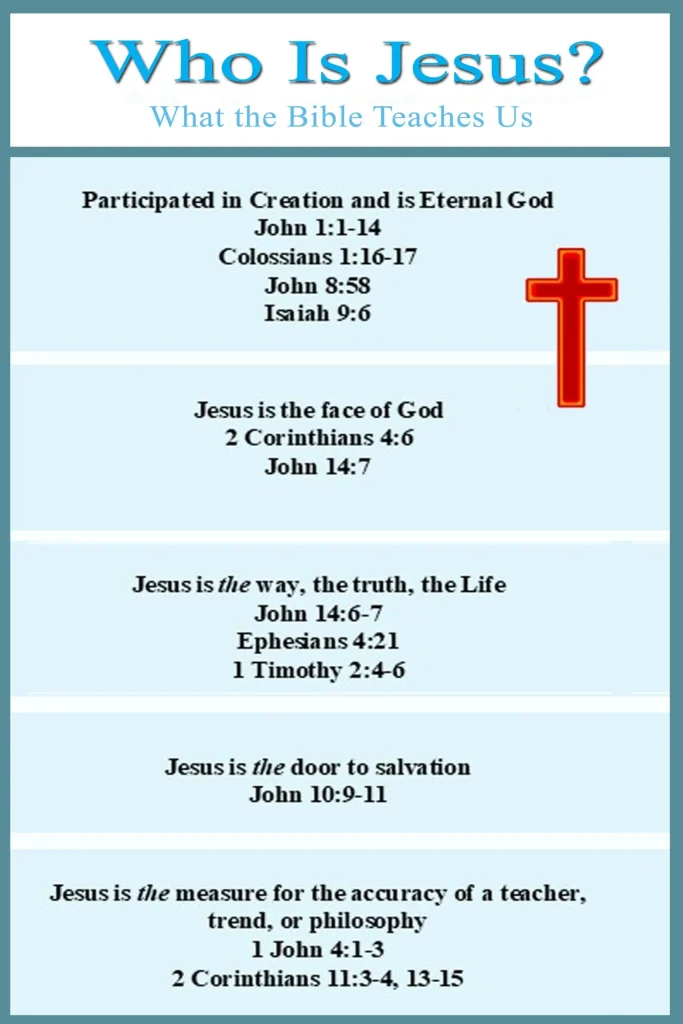
In order to have true spiritual discernment, we must develop our connection to Jesus. Jesus tells us that He is the way, the truth, and the life (John 14:6). The apostle John writes that anyone who does not acknowledge that Jesus is God – who took human form to come to earth – is not of God (1 John 4:1-4).
The Bible explains to us that any religion or philosophy that does not clearly acknowledge that Jesus is God actually leads you away from God. Distorted teaching about Jesus leads to spiritual confusion and makes us vulnerable to false teachers. Many influencers have charisma and may be sincere. But those attractive qualities are not a substitute for truth when it comes to our spiritual life (John 4:23-24; 2 Corinthians 11:1-15).
Personal Deception
The Bible teaches that people live in a state of spiritual blindness (Isaiah 25:7-8; Ephesians 2:2-3; 2 Corinthians 4:4; 2 Corinthians 11:14-15). The only cure for spiritual blindness is a personal commitment to Jesus Christ (John 14:6-7; 2 Corinthians 4:6; Ephesians 4:21). That is why He is called “The Light of the World” (John 8:12). This core teaching is different from what popular culture currently teaches about spirituality. Read more to find out what the Bible teaches us so that we can protect ourselves from spiritual confusion and deception.
The first way that we can be deceived is by holding a distorted view of Jesus (as described above). Jesus is the key to our connection to God and to understanding truth (John 14:6-7, 2 Corinthians 4:6; Ephesians 4:21). But, there are also ways that we can allow ourselves to be deceived or confused.

One way we may allow ourselves to be deceived is by justifying our personal sin (Ephesians 4:18-25; Hebrews 3:12-23). Now, we all struggle with sin as long as we are on earth! But one reason we want to resist personal sin is because it eventually distorts the truth about ourselves and God. We might also have more conflict with others if we refuse to see our own flaws and sin.
When we excuse our sin rather than confess it (and take it to God), we can drift into personal deception (1 John 1:6-10). We become unstable in our faith and can drift into beliefs that justify our desires.

Another way that we set ourselves up for deception is by neglecting the need to renew our minds (Joshua 1:8; Romans 12:1-2; Ephesians 4:18-25; Hebrews 3:12-13). This renewing of our minds is necessary because we all have distortions in how we think and react to life.
Distortions about God, ourselves, and the world drive our attitudes and decisions. Even the apostle Paul says that none of us see God clearly (1 Corinthians 2:11; 1 Corinthians 13:12; Ephesians 4:13; Colossians 3:10). It is only by intentional time with God and His word, the Bible, that we begin to understand Jesus, truth, and the nature of the world we live in (Isaiah 55:8-9; 1 Corinthians 2:11-14; Ephesians 4:13; Hebrews 5:12-14; Hebrews 6:1-4).

Personal Devotion to Jesus
Since true discernment is spiritual, not intellectual, it is key that we live each day in close connection to God (1 Corinthians 2:14). When we pick and choose what to believe and what to reject, then we will not have discernment! Many people form their spiritual lives collecting philosophies that appeal to them like selecting items at a buffet. But when we do that, we operate out of our soul (our opinions and emotions) rather than out of a close relationship with God (John 4:23-24).
God gives wisdom and discernment to us when we are following close to Him each day (Psalm 25:14; John 14:21; Ephesians 4:21-27). When we create our own rules for spirituality, we will not have spiritual discernment. We will be controlled by our emotions, past experience, and trends in society (Romans 12:1-2).

Building Spiritual Discernment and Wisdom
As Jesus warns us, there are many false teachers on a very wide road that leads to confusion, dead ends, and destruction (Matthew 7:13-14). These warnings are not to scare us, but to help us recognize that popular trends and culture will not build a true connection to God (Matthew 7:21-24; John 4:22-24). Jesus died so that we can have connection to Him, assurance of a place in heaven (John 14:6-7; 1 John 5:11-13), and wisdom to navigate life.
Draw close to Him each day by taking time to read the Bible and pray. Ask Him to teach you. Over time, you will build a deep connection to the Lord, deeper recognition of false teaching, and more strength to handle the challenges of life.

More Resources About Discernment
Blog on Recognizing False Teaching