

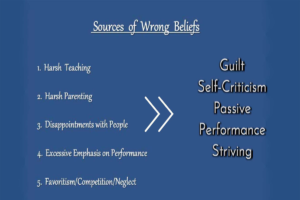
When you have suffered abuse or trauma, your view of the world changes. Too much disappointment leads us to develop negative (or limiting) beliefs about ourselves, people, and even about God. Difficult emotional experiences impact our spiritual lives in the form of “limiting beliefs” or distortions. Even though you may have a strong faith in God, you may also have fear in approaching God with your needs, some difficulty reading the Bible without experiencing guilt, or you may have a nagging sense that you are not meeting up to God’s expectations of a good Christian. These are distortions that come from emotional pain.
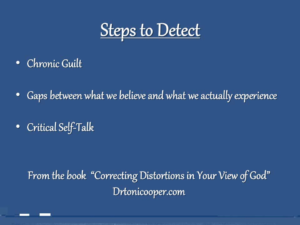
Likewise, when we are quick to judge ourselves or are easily offended, we are probably reacting from emotional pain or limiting beliefs. We can detect the presence of limiting beliefs when there is a significant gap between what we believe in our head about God and what we experience in our hearts on a day to day basis.
An Example of Limiting Beliefs in the Bible
Here is an example of how trauma interferes with seeing how God reaches out to us. The people traveling on the road to Emmaus did not recognize Jesus when He came to walk with them after His crucifixion (Luke 24:13-35). They were actually discussing the death of Jesus while He physically walked alongside them. They were upset because they had hoped that Jesus would set them free from the oppressive Roman government. Instead, the leaders had crucified Him. They couldn’t recognize Jesus, who was right there in front of them, because they were lost in their grief. After some time with Jesus explaining the Scriptures to these believers, they finally saw that He was still with them.
How Trauma and Limiting Beliefs Block Your Joy
 As we see God more clearly, we can receive more of His love and truth all balanced with His grace. Then we will more wholeheartedly love God, ourselves, and other people with the overflowing joy that God intended for us to have (Psalm 16:11; Mark 12:29-31; John 17:23). That kind of faith and fire can change us and the world. So, it’s important to shift out of those negative beliefs into the light of God’s truth. Jesus tells us that it’s the truth that sets us free (John 8:31-32)!
A Quiz: Do You Have Limiting Beliefs About God?
Here are some TRUE or FALSE statements. How do you see God?
____ 1. It is important that I work hard to please God.
____ 2. God is easily disappointed in me.
____ 3. I can count on my church/pastor/priest to explain God to me.
____ 4. Praying in my car or listening to messages online are great ways to stay deeply connected to God.
____ 5. I should keep telling God how sorry I am for my sin.
____ 6. Suffering and tragedy are things God sends to make me stronger.
____ 7. When I feel tormented about a sin, that is from God.
____ 8. Since God will forgive me later, it is okay if I do things now that I know are wrong.
According to the Bible, all of the statements above are False – they are limiting beliefs! If you like, you can look up these Scripture verses that explain what the Bible says about these common limiting beliefs.
- Matthew 11:28 Ephesians 2:8-9 Psalm 46:10
- Romans 8:1 Psalm 103:8, 13, 14 Isaiah 1:18
- I Timothy 2:5 Acts 17:11 Mark 7:13
- Psalm 46:10 John 17:17 Isaiah 30:15
- I John 1:9 Romans 8:1 Psalm 103:11-12
- James 1:17 Matthew 6:13 John 10:10
- I John 1:9 Romans 8:1 Psalm 85:8a
- Galatians 6:7 John 14:23 Hebrews 3:13
Correcting Your Limiting Belief Systems
Here are a few suggestions of how you can change the mind sets that are holding you back. God wants to help you see Him more clearly!
- Recognize the emotional experiences that created the limiting belief.
- Interrupt negative self-talk.
- Replace old ways of thinking with the truth of the Bible.
- Develop connections, through church or Bible study groups, with people who will help you build positive ways of thinking and coping.
- Examine where you are allowing toxic influences into your mind through media, entertainment, or abusive relationships.
- Learn to abide in Jesus for your spiritual power, peace, and strength.
Belief systems that encourage passive acceptance of suffering, abuse, or injustice as “God’s will” are not consistent with my understanding of the Bible. Watch out for teaching that encourages blind acceptance of authority or abuse. On the other hand, it is also important to recognize that the Bible does not teach that all behavior is acceptable to God. Take steps to bring your life into alignment with the principles of the Scripture. When we obey God, He gives us the power to change.
Resources to Correct Limiting Beliefs About God
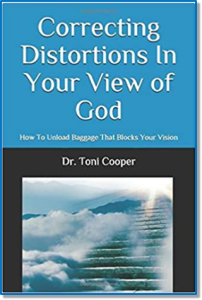 Dysfunctional families, organizations, and even churches teach people not to think for themselves or value their own unique personality. When there has been a heavy emphasis on fear (of a person or of God) there is going to be a distortion or imbalance between grace and truth. Jesus is the perfect balance of grace, truth and mercy (John 1:12-14). Some of the books I have written help people untangle limiting beliefs, distortions, and religious guilt. Check my books, videos, and podcast if this is something you need. (There is also more on this subject in my blog on Perfectionism.)
The information in this article is taken from my book, “Correcting Distortions in Your View of God: How to Unload Baggage that Blocks Your Vision.” You can purchase this book through Amazon, or from Booksby (which offers free shipping).